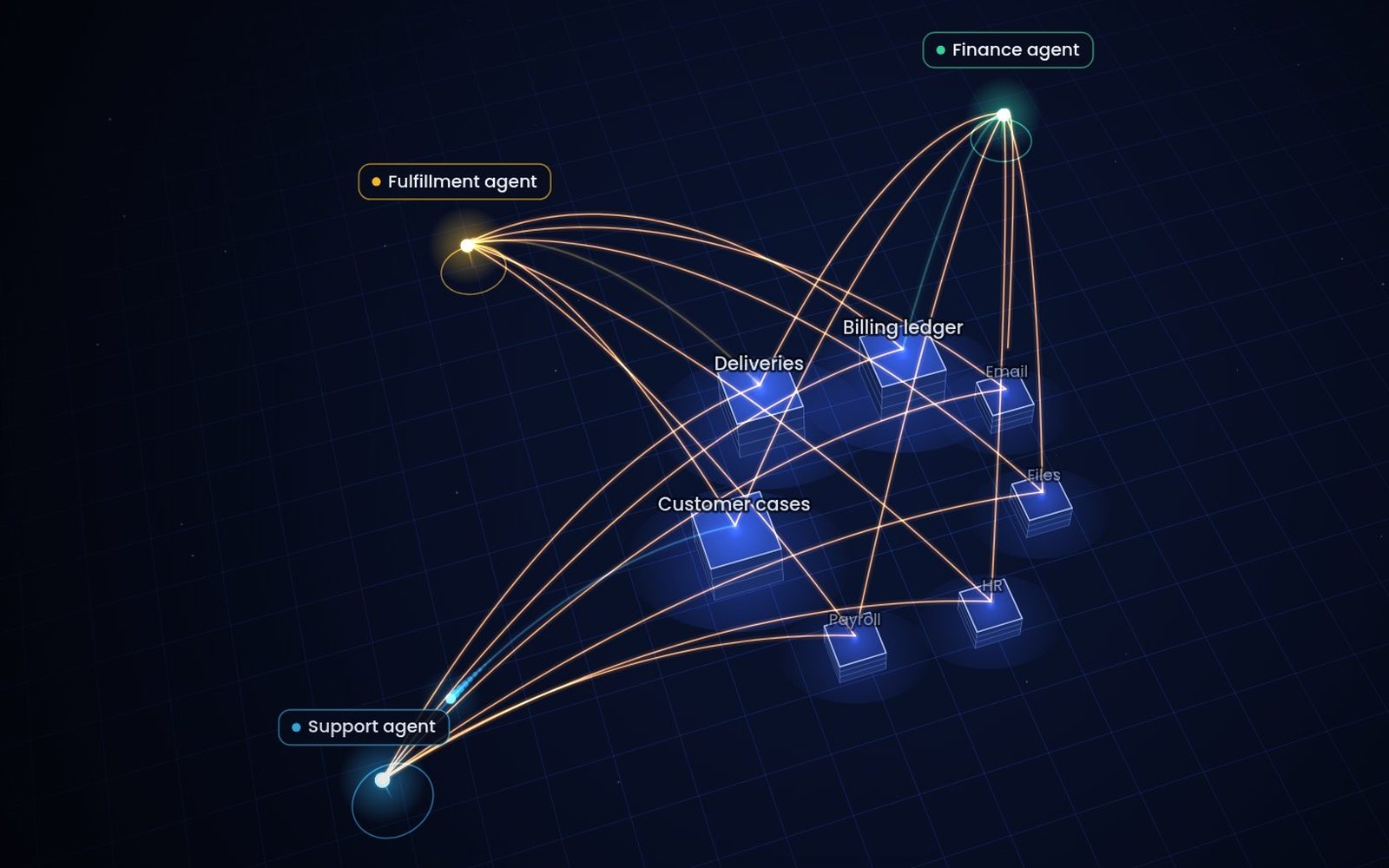
Over-privileged
More access than the job needs
Agents inherit broad credentials, so one support bot can reach billing, HR and payroll.
AgentFort finds every agent, limits what it can reach, stops sensitive data from leaking, and shows you everything it did.
AI agents read customer records, call internal APIs and take actions for employees. That creates four new ways for things to go wrong.
Agents inherit broad credentials, so one support bot can reach billing, HR and payroll.
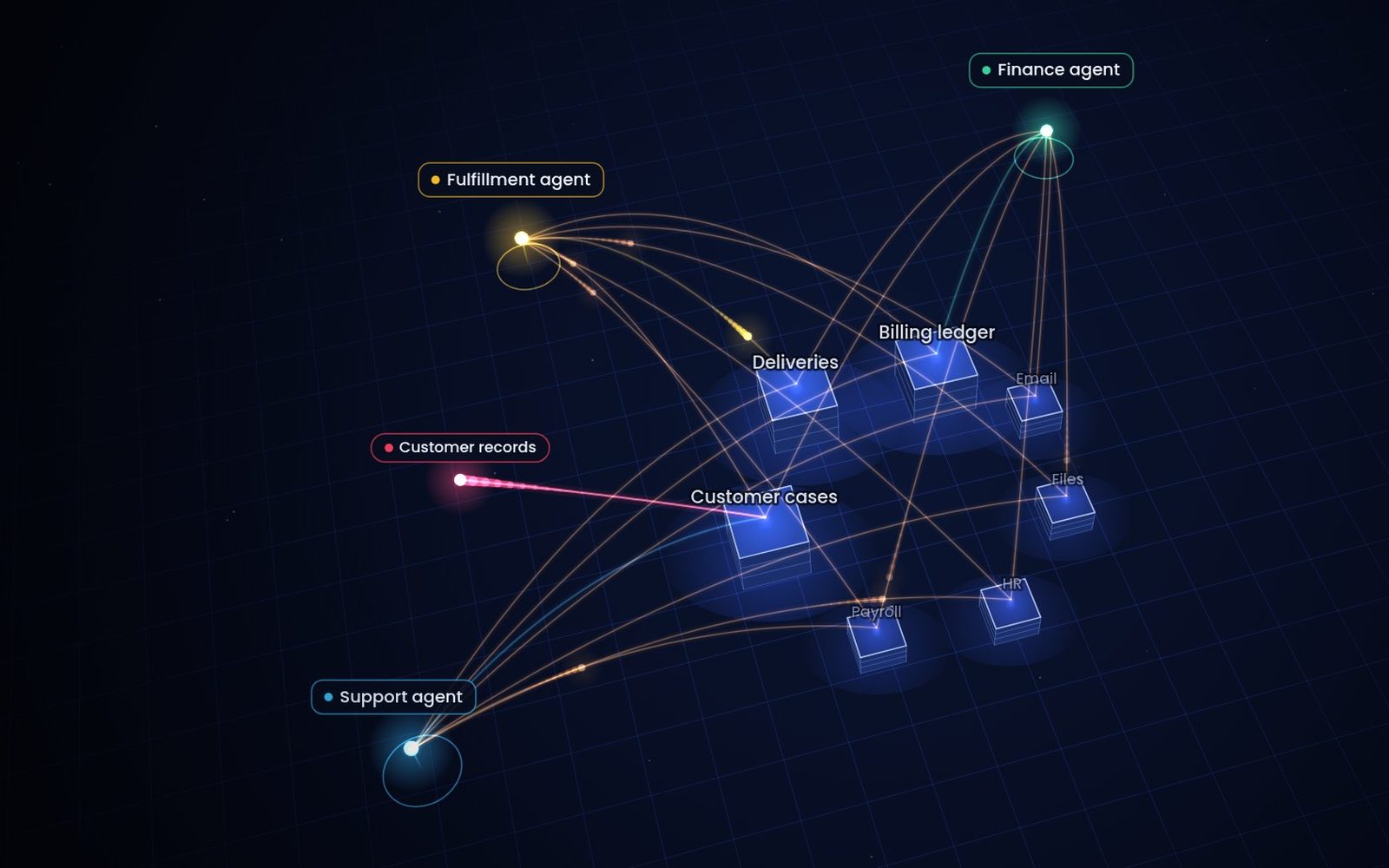
Customer records, payment data and secrets flow through prompts, files and tool calls.
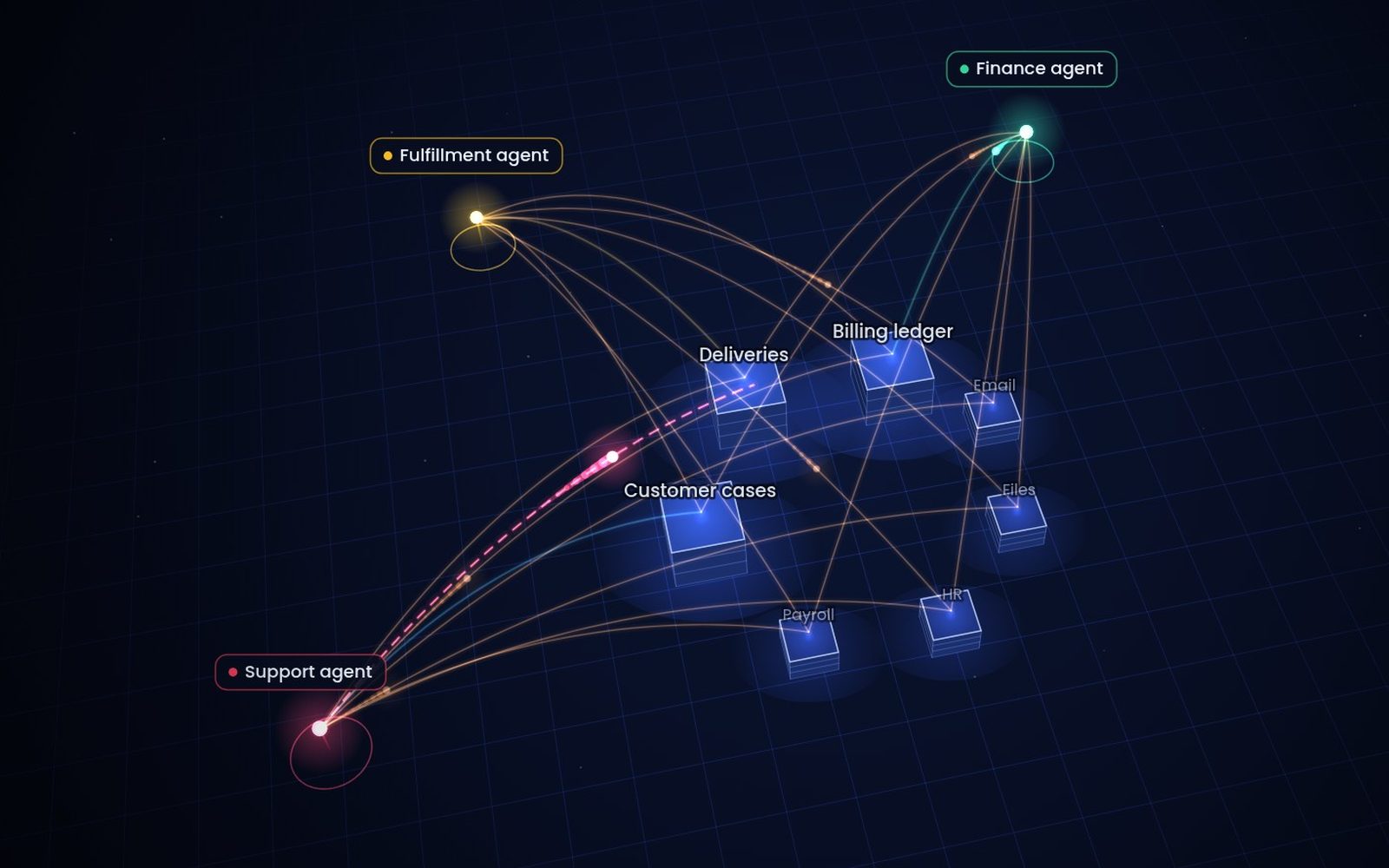
A hidden instruction in a document or web page can redirect an agent's work.
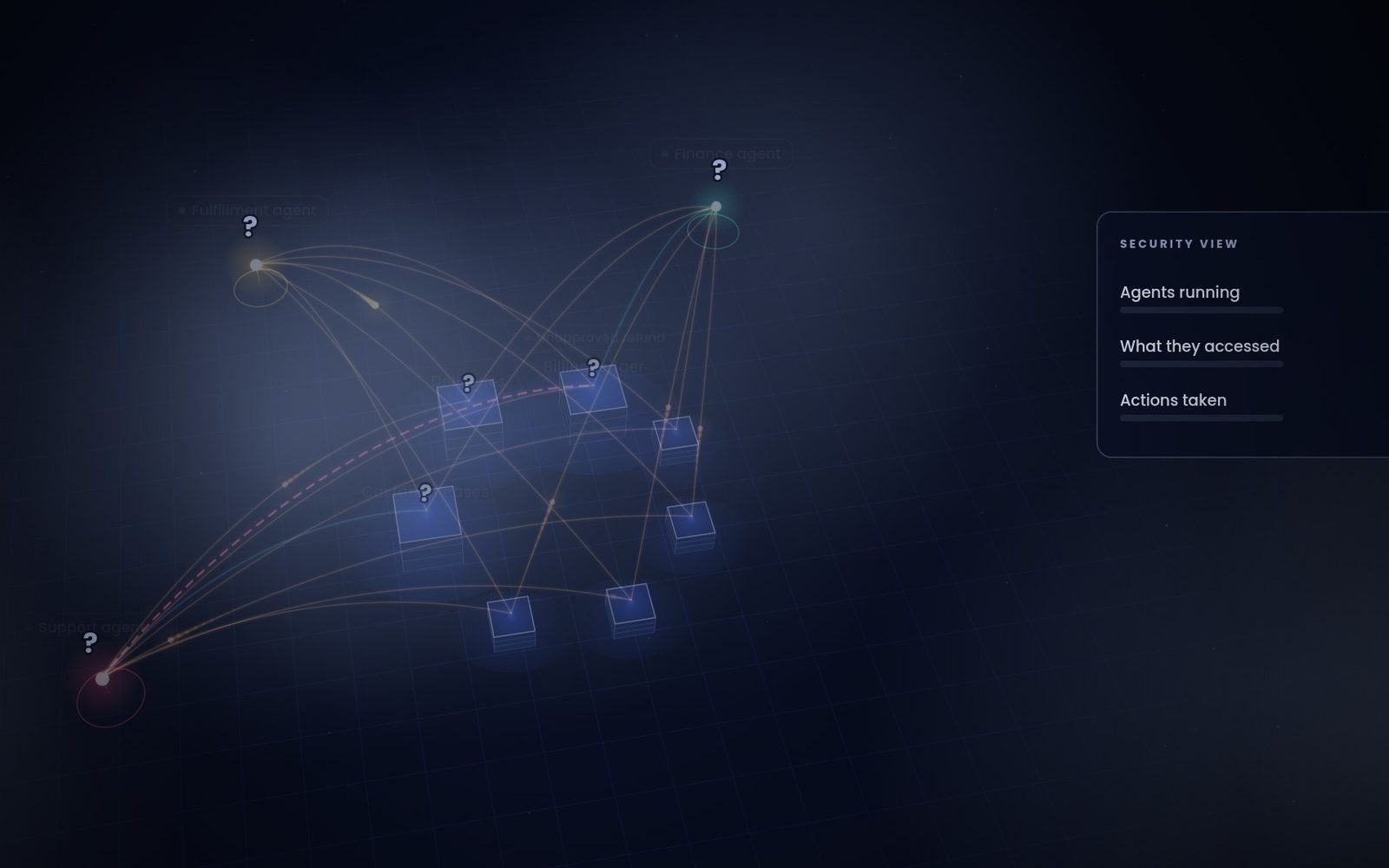
Security teams can't say which agents are running, what they touched or what they did.
Each control answers a question your security team already asks. Together they let agents keep working while every request is identified, checked and recorded.
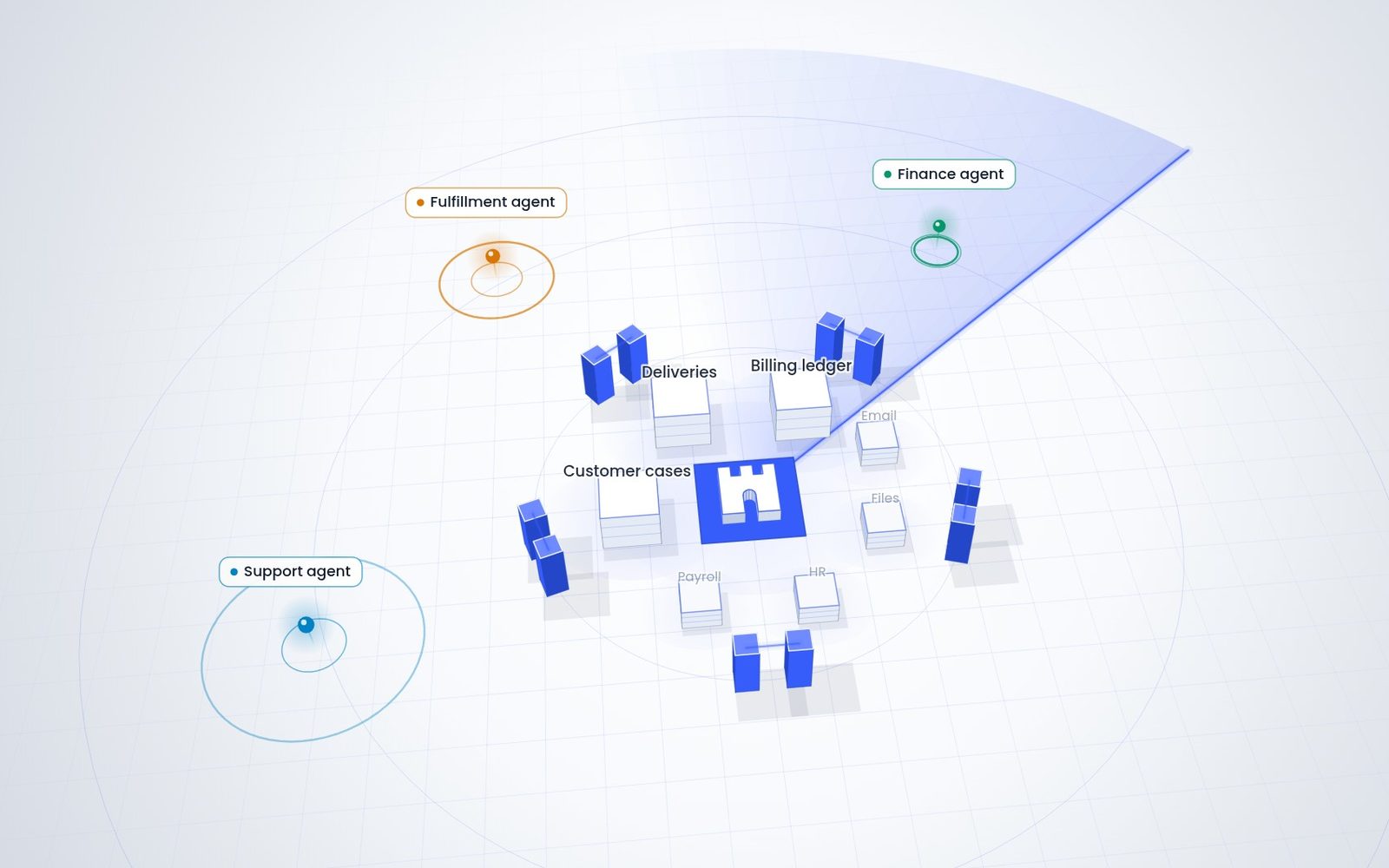
Connect your infrastructure once. AgentFort observes the agents already running and gives each one a cryptographic identity and an accountable owner.
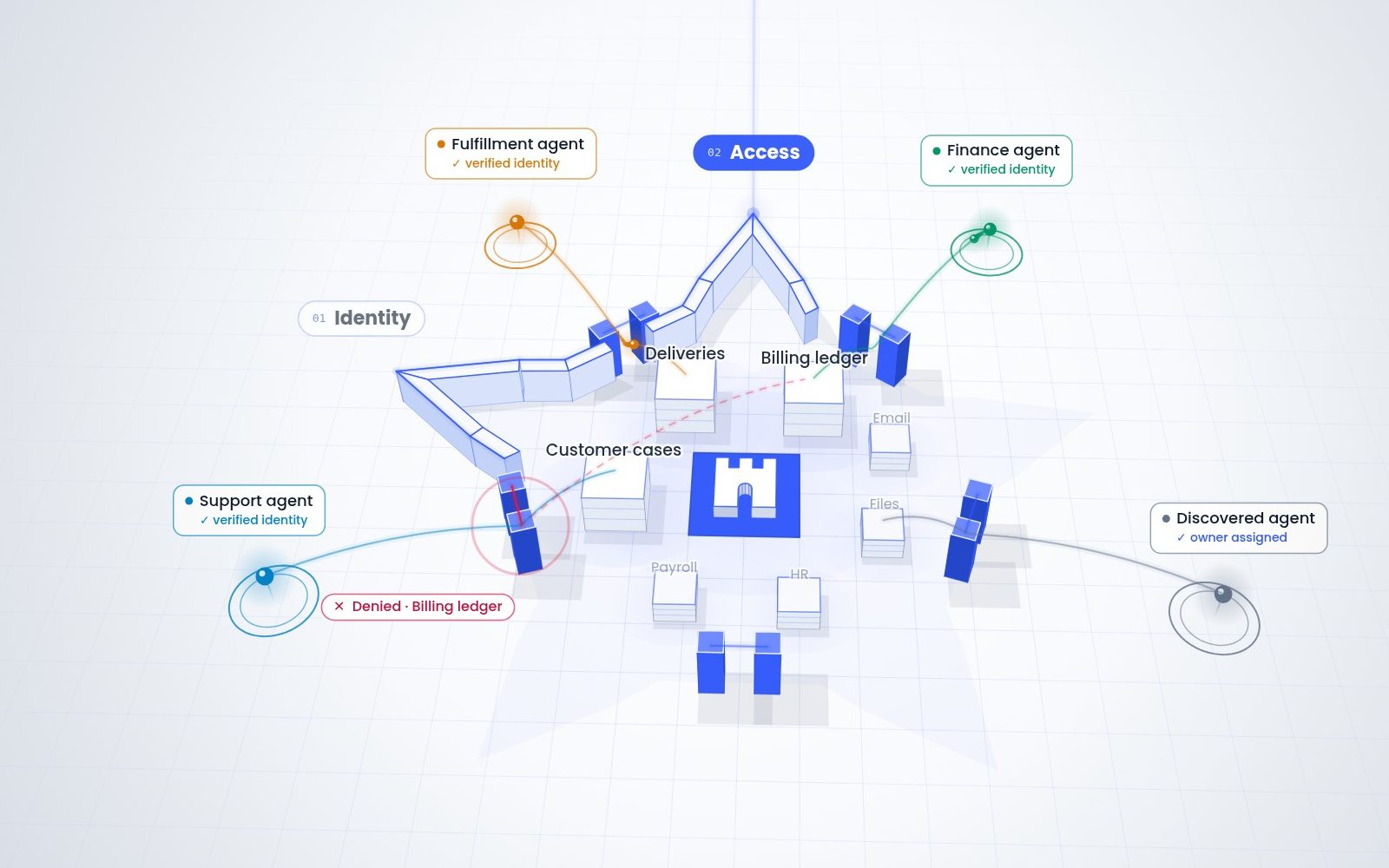
permit (principal in Group::"support-agents",
        action == Action::"cases.read",
        resource in Service::"customer-cases");
forbid (principal in Group::"support-agents",
        action == Action::"billing.adjust", resource);
Describe what an agent may do in plain language. AgentFort turns it into enforceable rules, lets you test them, and checks every request against them.
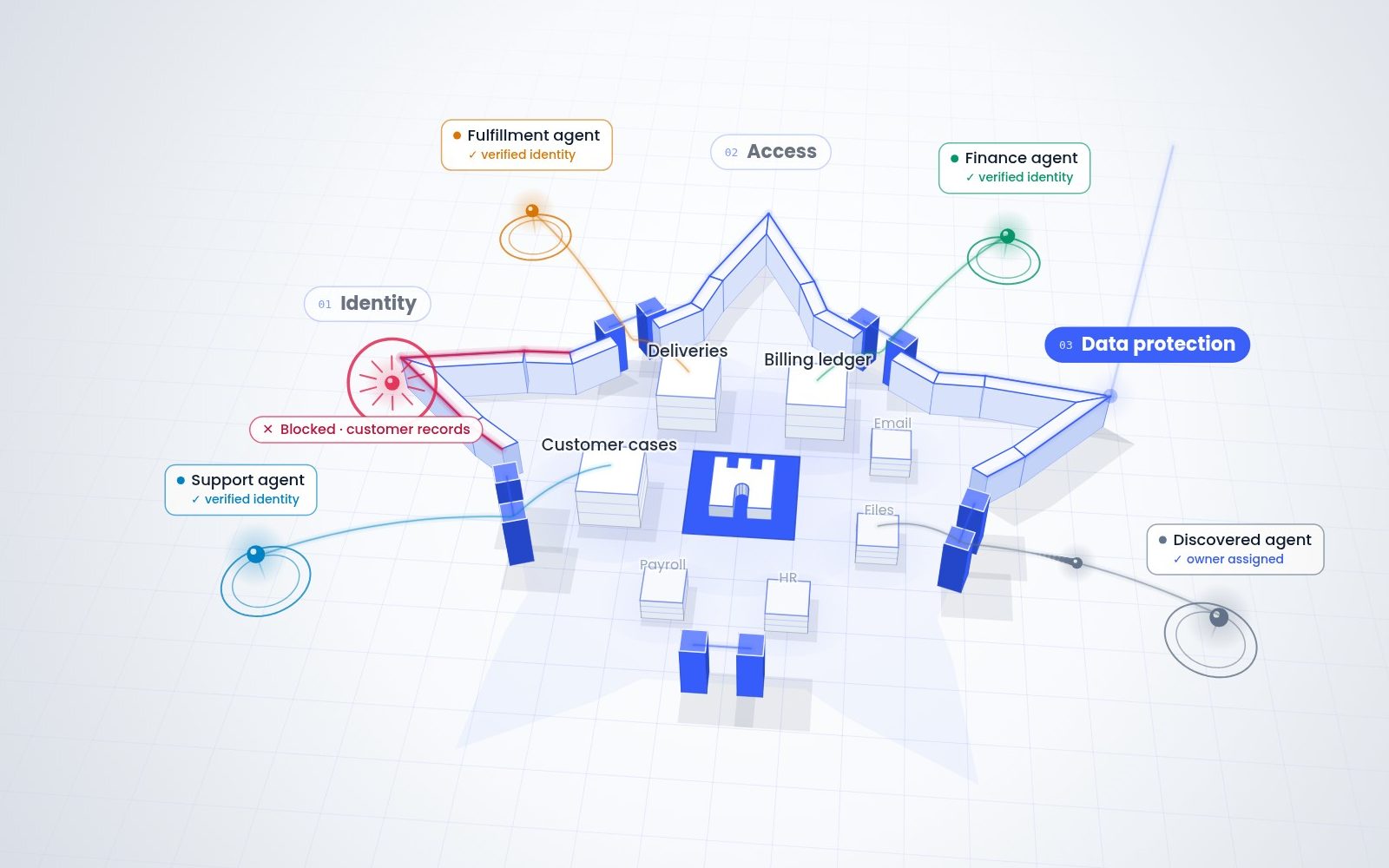
AgentFort inspects the data moving through every agent, classifies what's sensitive, and masks or blocks it before it can leak.
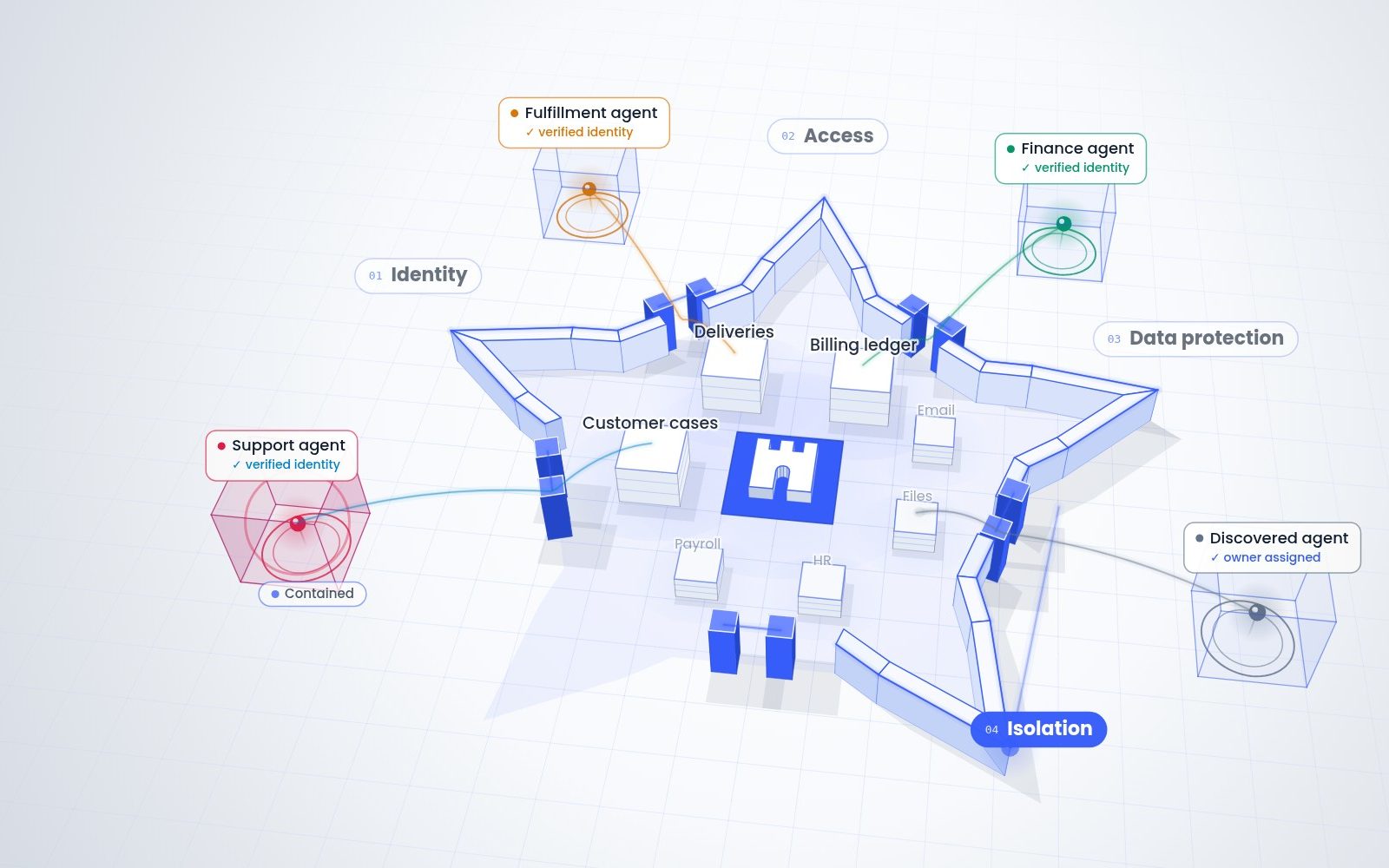
Agents run in isolated environments. If one is manipulated, the damage stays inside its boundary.
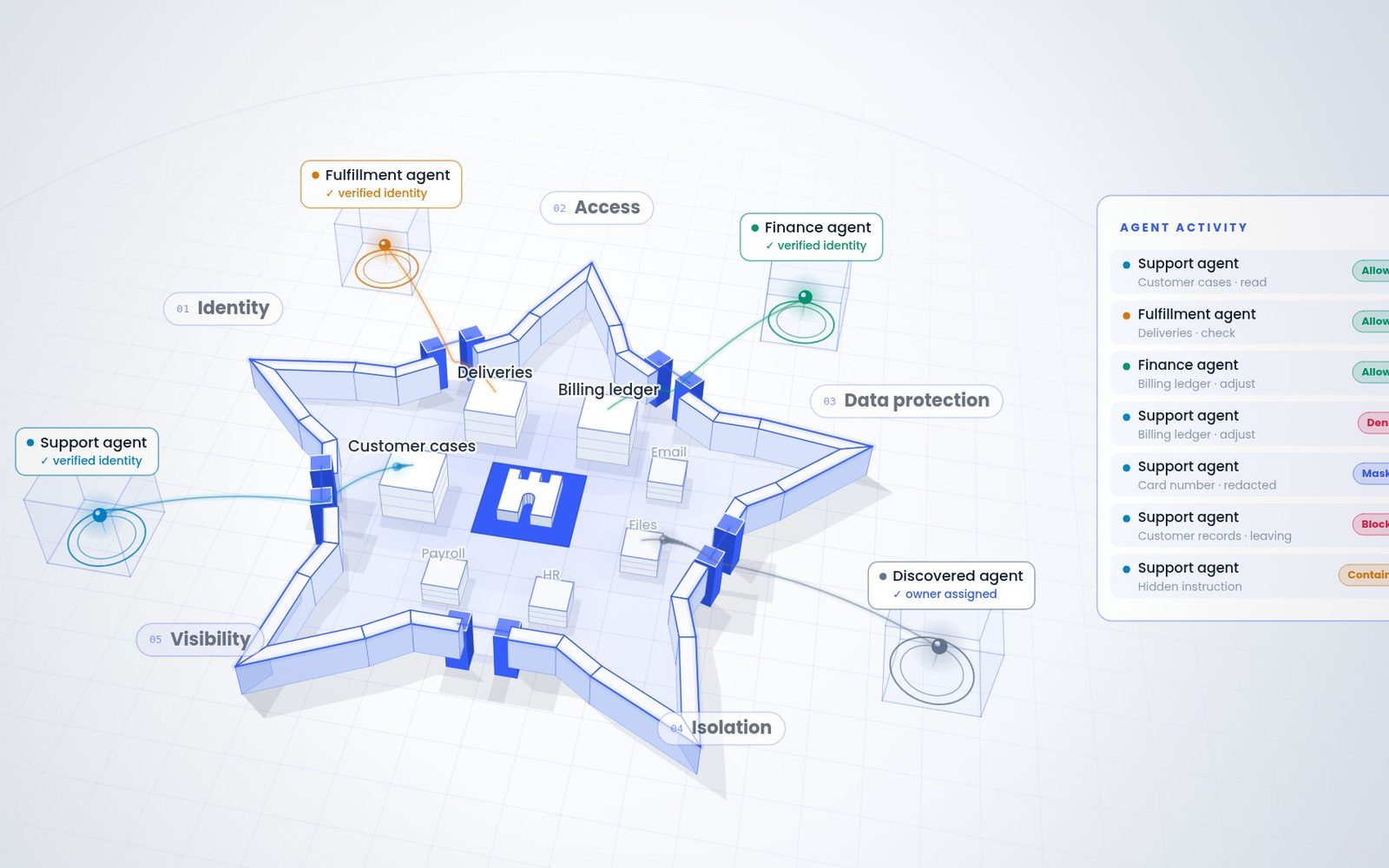
Security teams get one place to see which agents are running, what they accessed and what they did, with the reasoning behind every decision.
You connect infrastructure, not individual agents. AgentFort does the observing; your team makes the decisions about ownership and access.
Connect a cluster, cloud account, host group or telemetry source. Agents appear with the evidence that found them.
Matching workloads enroll with a verified identity and an accountable owner.
Connect business systems, delegate bounded authority, then write, test and publish policy.
Requests flow through AgentFort's gateway on your side. Every decision leaves a receipt.
In your cloud or network, or hosted by us. Policy, owners, inventory and investigations live here.
Discovery collectors and workload identity in the scopes you connect. No desktop install for every employee.
The gateway and executor sit inside your boundary, so decisions and evidence stay on your side.
AgentFort vs. traditional DLP
Traditional DLP watches people and endpoints. AgentFort inspects what agents send and receive, with the agent's identity and task attached.
AgentFort vs. API gateways
Gateways route and rate-limit traffic. AgentFort decides whether this agent, acting for this owner, may perform this operation.
AgentFort vs. identity providers
Your identity provider manages people and service accounts. AgentFort adds agent discovery, delegated authority and per-request policy on top.
Securing agents now, shaping the product with us, or looking at the company: each path goes straight to the founder.
A working session on your own agents: where discovery, identity and enforcement sit in your environment, and the evidence they produce.
Request a demoThe full platform in your environment, a direct line to the team building it, and priority on your requirements.
Become a design partnerWhy AI agents need a new access-control layer, what is already built, and the founder building it.
For investors
Founder, AgentFort · previously Lead, Security Automation at Amazon
12 years building security automation, application security, identity and payments systems at Amazon, including the internal products Design Inspector and Deep Threat Modeler. Master's degree in Artificial Intelligence and named inventor on five issued patents in security automation and design analysis.